2020. május 8., péntek

Difference Between Hacker, Programmer, And Developer

                There are numerous sprite debates and discussions on the differences between hackers, developers, and programmers. With most descriptions, however, there is usually a slight flaw in at least one or two serious ways. These terms are all traditionally misused and misunderstood, with many of us frequently mixing them up as an all-encompassing definition of anyone working on the Software realm.


However, if you are looking to clarify your project goals and business needs adequately, it is essential that you understand that all these terms do not all represent the same thing (although a person with the ability to program a computer can use different skills to accomplish various outcomes).

What's more, it is also quite important for you to differentiate between these three terms if you are working with software development groups and the fact that they cannot be interchanged.  This excerpt seeks to break it all down for you mainly-the vital difference between hackers, developers, and programmers, their actual tasks, as well as their relationship.

The Hacker

A hacker is a computer expert who uses his knowledge of computer networking, programming, cryptography, and databases to overcome a problem in the system. Hackers are more concerned with availing the concept as opposed to minding about the long-term quality. And although a hacker can conceptualize about how will ultimately be created while frantically writing code, the role is primarily about speed.

A hacker, as well as hacking,' are most useful in dealing with emergency circumstances or when prototyping an item. Hackers and the profession of hacking, in general, is not concerned with the ultimate effect of the code.

Hackers make things. They typically alter the things programmers create and transform them to function differently as well as also writing codes. While "hacker" can refer to any skilled technical person, the term has become associated with computer security, someone who, with their technical knowledge, uses bugs or exploits to break into computer systems.

The Programmer

A programmer is an individual equipped with the expertise to write codes. Programmers usually master in a single or multiple programming languages and boast vast knowledge on related areas also. Their roles are relatively procedural and mandate for total concentration not to mention refined skills.

A programmer is solely focused both in writing codes as well as getting features appropriately performed so that these features are accessible for integration and later use. Programming is merely the process of swinging the hammer and adequately creating the software.

Usually, it is easy to identify that an individual is in programming mode since they often have a concentrated gaze and are deep in the zone.' Programmers are normally internalizing the system they are operating as well as editing and writing pieces of something that can only best be described as a long algebra problem.'

The Developer

Developers are typically creators. However, not anyone that is an expert at writing codes can be a developer. Developers are experts at identifying ways around various problems as well as plugging together components to fulfill some requirements. These professionals solve problems or create things by adhering to a specific set of principles (design and implementation).

This set of principles includes attributes such as maintainability, performance, robustness, security, and scale among others. They solve problems in a systematic manner. Ideally, this is what distinguishes programmers, developers, and hackers.

In A Nutshell:

In all simplicity, these three professionals solve various problems using code. A programmer is an encompassing term that means a problem solver, a developer is a trained programmer (formal) who besides resolving issues achieves it in an organized and methodical manner likely instilled in the course of their formal education, and a hacker is a tinkerer/creator.

Despite their differences in individual meaning and professional capacities, these terms, however, can interrelate with each other quite effectively. In fact, it is possible for you to combine the skills to your benefit. In reality, all developers and hackers are programmers. However, despite their expertise, not many developers and programmers are creative enough to warrant an identity as hackers.

Finally, although hackers and programmers are quite impressive, they are however not experienced or educated enough to warrant consideration as developers. The similarity, however, is that all work to create code, each in their specified manner.

Ideally, anyone would work to be all the above-as creative as a hacker, though, somewhat better experienced and formally trained to design software as opposed to only hacking.

Nonetheless, even if you lack the creativity, experience, or education, or either to necessarily create a broad application, it is still worth noting that you are still ideally a programmer. And in case you did not know, solving a problem through code is by itself, a superpower!


@£√£RYTHING NT

Continue reading
  1. Body Hacking
  2. Foro Hacking
  3. El Mejor Hacker

TOP 10 HACKING MOVIES YOU SHOULD WATCH

Technology and hacking gave a new horizon to the science fiction movies. As hacking is getting common and every online thing is at risk whether it's 10% or 90%, not a system is 100% secure over the internet. Every day new security holes are getting discovered. So, now most of the sci-fi movies have the tech and hack stuff to grow awareness in everybody's mind about the online privacy and risk to their information. Here I am sharing top 10 hacking movies that worth a watch.

TOP 10 HACKING MOVIES

Here I have listed top 10 hacking movies that you should watch.

1. HACKERS (1995)

In Hackers, Angelina Jolie and Jonny Lee Miller portray two youthful and hip hackers. Miller portrays a hacker who got caught as a very young child at an age of 11 years after crashing thousands of computers and has been sentenced to zero computer access until his 18th birthday.

2. LIVE FREE OR DIE HARD (2007)

Live Free or Die Hard (also known as Die Hard 4 and released as Die Hard 4.0 outside North America) is a 2007 American action film, and the fourth in the Die Hard film series depicts a scenario where a hacker played by Timothy Olyphant (of Justified fame) takes down nearly the entire U.S. infrastructure in an attempt to transfer trillions of dollars from the Federal Reserve to his account. This movie gives a complete idea of how actually these blackhat hackers operate.

3. EAGLE EYE (2008)

In this movie, two people get a call from an unknown number by a woman. They get a task on the phone that if they don't follow the phone call they would die. This movie displays supercomputer hack on all networks and military networks. This is just an amazing movie on how artificial intelligence computer hacks our real life for bad motives.

4. ALGORITHM (2014)

The film 'Algorithm' tracks the travails of Will, who is the freelance computer hacker who hacks into a top-secret government contractor agency and downloads all their recently developed programs." You can see the full movie below

5. WARGAMES (1983)

The film features David Lightman (Broderick), a young high school student hacker who accidentally hacks into a military supercomputer and starts the countdown to World War III.

6. THE MATRIX (1999)

This is one of the greatest science fiction movies. In this movie, reality, as perceived by most humans, is actually a simulated reality called "the Matrix", created by machines to subdue the human population, while their bodies' heat and electrical activity are used as an energy source.
A character named "Neo", who is a computer Hacker, learns this truth and is drawn into a rebellion against the machines, which involves other people who have been freed from the "dream world". The Matrix franchise is a trilogy movie series.

7. TAKEDOWN (2000)

This movie is based on famous computer U.S. hacker Kevin David Mitnick. Based upon the book and written by his nemesis, Tsutomu Shimomura, the story tends to glorify Shimomura. Mitnick operated in the 1980s and '90s and eventually went to prison for a couple of years. Now, he is a highly paid IT security consultant, speaker, and writer.

8. BLACKHAT (2015)

Blackhat is newly released movie by Chris Hemsworth. In this movie, hackers hack the Chinese nuclear power plant to start a nuclear reaction. Simultaneously, they also hack the stock exchange and steal millions of dollars from the bank. This movie shows how a black hat hackers threaten governments.

9. THE ITALIAN JOB (2003)

Although the MINI Coopers are really the stars of The Italian Job (a remake of the 1969 film of the same name), Seth Green plays Lyle, a hacker among a group of elite thieves, who is able to manipulate traffic signals, among other devices, that make this grand theft possible.

10. UNTRACEABLE (2008)

This film involves a serial killer who rigs contraptions that kill his victims based on the number of hits received by a website KillWithMe.com that features a live streaming video of the victim. Millions of people log on, hastening the victims' deaths.

There may be more exciting hacking movies but I found these top 10 hacking movies that you should watch for once.
You can also find out the top 5 most dangerous hackers in the real world living.
More info

ASIS CTF Quals 2015 - Sawthis Writeup - Srand Remote Prediction


The remote service ask for a name, if you send more than 64 bytes, a memory leak happens.
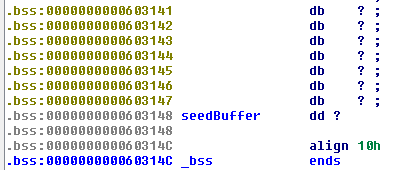
The buffer next to the name's is the first random value used to init the srand()


If we get this value, and set our local srand([leaked] ^ [luckyNumber]) we will be able to predict the following randoms and win the game, but we have to see few details more ;)

The function used to read the input until the byte \n appears, but also up to 64 bytes, if we trigger this second condition there is not 0x00 and the print shows the random buffer :)

The nickname buffer:


The seed buffer:


So here it is clear, but let's see that the random values are computed with several gpu instructions which are decompiled incorrectly:


We tried to predict the random and aply the gpu divisions without luck :(


There was a missing detail in this predcitor, but there are always other creative ways to do the things.
We use the local software as a predictor, we inject the leaked seed on the local binary of the remote server and got a perfect syncronization, predicting the remote random values:


The process is a bit ugly becouse we combined automated process of leak exctraction and socket interactive mode, with the manual gdb macro.


The macro:


Read more


  1. Defcon Hacking
  2. Computer Hacking
  3. Herramientas Hacking Etico
  4. Google Hacking Database
  5. Hacking Health
  6. Como Aprender A Ser Hacker
  7. Hacking Definicion
  8. Hacker Definicion Informatica

Practical Dictionary Attack On IPsec IKE

We found out that in contrast to public knowledge, the Pre-Shared Key (PSK) authentication method in main mode of IKEv1 is susceptible to offline dictionary attacks. This requires only a single active Man-in-the-Middle attack. Thus, if low entropy passwords are used as PSKs, this can easily be broken.

This week at the USENIX Security conference, Dennis Felsch will present our research paper on IPsec attacks: The Dangers of Key Reuse: Practical Attacks on IPsec IKE. [alternative link to the paper]

In his blog post, Dennis showed how to attack the public key encryption based authentication methods of IKEv1 (PKE & RPKE) and how to use this attack against IKEv2 signature based authentication method. In this blog post, I will focus on another interesting finding regarding IKEv1 and the Pre-Shared Key authentication.

IPsec and Internet Key Exchange (IKE)

IPsec enables cryptographic protection of IP packets. It is commonly used to build VPNs (Virtual Private Networks). For key establishment, the IKE protocol is used. IKE exists in two versions, each with different modes, different phases, several authentication methods, and configuration options. Therefore, IKE is one of the most complex cryptographic protocols in use.

In version 1 of IKE (IKEv1), four authentication methods are available for Phase 1, in which initial authenticated keying material is established: Two public key encryption based methods, one signature based method, and a PSK (Pre-Shared Key) based method.

The relationship between IKEv1 Phase 1, Phase 2, and IPsec ESP. Multiple simultaneous Phase 2 connections can be established from a single Phase 1 connection. Grey parts are encrypted, either with IKE derived keys (light grey) or with IPsec keys (dark grey). The numbers at the curly brackets denote the number of messages to be exchanged in the protocol.

Pre-Shared Key authentication

As shown above, Pre-Shared Key authentication is one of three authentication methods in IKEv1. The authentication is based on the knowledge of a shared secret string. In reality, this is probably some sort of password.

The IKEv1 handshake for PSK authentication looks like the following (simplified version):


In the first two messages, the session identifier (inside HDR) and the cryptographic algorithms (proposals) are selected by initiator and responder. 

In messages 3 and 4, they exchange ephemeral Diffie-Hellman shares and nonces. After that, they compute a key k by using their shared secret (PSK) in a PRF function (e.g. HMAC-SHA1) and the previously exchanged nonces. This key is used to derive additional keys (ka, kd, ke). The key kd is used to compute MACI over the session identifier and the shared diffie-hellman secret gxy. Finally, the key ke is used to encrypt IDI (e.g. IPv4 address of the peer) and MACI. 

Weaknesses of PSK authentication

It is well known that the aggressive mode of authentication in combination with PSK is insecure and vulnerable against off-line dictionary attacks, by simply eavesedropping the packets. For example, in strongSwan it is necessary to set the following configuration flag in order to use it:
charon.i_dont_care_about_security_and_use_aggressive_mode_psk=yes

For the main mode, we found a similar attack when doing some minor additional work. For that, the attacker needs to waits until a peer A (initiator) tries to connect to another peer B (responder). Then, the attacker acts as a man-in-the middle and behaves like the peer B would, but does not forward the packets to B.

From the picture above it should be clear that an attacker who acts as B can compute (gxy) and receives the necessary public values session ID, nI, nR. However, the attacker does not know the PSK. In order to mount a dictionary attack against this value, he uses the nonces, and computes a candidate for k for every entry in the dictionary. It is necessary to make a key derivation for every k with the values of the session identifiers and shared Diffie-Hellmann secret the possible keys ka, kd and ke. Then, the attacker uses ke in order to decrypt the encrypted part of message 5. Due to IDI often being an IP address plus some additional data of the initiator, the attacker can easily determine if the correct PSK has been found.

Who is affected?

This weakness exists in the IKEv1 standard (RFC 2409). Every software or hardware that is compliant to this standard is affected. Therefore, we encourage all vendors, companies, and developers to at least ensure that high-entropy Pre-Shared Keys are used in IKEv1 configurations.

In order to verify the attack, we tested the attack against strongSWAN 5.5.1.

Proof-of-Concept

We have implemented a PoC that runs a dictionary attack against a network capture (pcapng) of a IKEv1 main mode session. As input, it also requires the Diffie-Hellmann secret as described above. You can find the source code at github. We only tested the attack against strongSWAN 5.5.1. If you want to use the PoC against another implementation or session, you have to adjust the idHex value in main.py.

Responsible Disclosure

We reported our findings to the international CERT at July 6th, 2018. We were informed that they contacted over 250 parties about the weakness. The CVE ID for it is CVE-2018-5389 [cert entry].

Credits

On August 10th, 2018, we learned that this attack against IKEv1 main mode with PSKs was previously described by David McGrew in his blog post Great Cipher, But Where Did You Get That Key?. We would like to point out that neither we nor the USENIX reviewers nor the CERT were obviously aware of this.
On August 14th 2018, Graham Bartlett (Cisco) email us that he presented the weakness of PSK in IKEv2 in several public presentations and in his book.
On August 15th 2018, we were informed by Tamir Zegman that John Pliam described the attack on his web page in 1999.

FAQs

  • Do you have a name, logo, any merchandising for the attack?
    No.
  • Have I been attacked?
    We mentioned above that such an attack would require an active man-in-the-middle attack. In the logs this could look like a failed connection attempt or a session timed out. But this is a rather weak indication and no evidence for an attack. 
  • What should I do?
    If you do not have the option to switch to authentication with digital signatures, choose a Pre-Shared Key that resists dictionary attacks. If you want to achieve e.g. 128 bits of security, configure a PSK with at least 19 random ASCII characters. And do not use something that can be found in public databases.
  • Am I safe if I use PSKs with IKEv2?
    No, interestingly the standard also mentions that IKEv2 does not prevent against off-line dictionary attacks.
  • Where can I learn more?
    You can read the paper. [alternative link to the paper]
  • What else does the paper contain?
    The paper contains a lot more details than this blogpost. It explains all authentication methods of IKEv1 and it gives message flow diagrams of the protocol. There, we describe a variant of the attack that uses the Bleichenbacher oracles to forge signatures to target IKEv2. 
Related posts

2020. május 7., csütörtök

Airba.sh - A POSIX-compliant, Fully Automated WPA PSK Handshake Capture Script Aimed At Penetration Testing


Airbash is a POSIX-compliant, fully automated WPA PSK handshake capture script aimed at penetration testing. It is compatible with Bash and Android Shell (tested on Kali Linux and Cyanogenmod 10.2) and uses aircrack-ng to scan for clients that are currently connected to access points (AP). Those clients are then deauthenticated in order to capture the handshake when attempting to reconnect to the AP. Verification of a captured handshake is done using aircrack-ng. If one or more handshakes are captured, they are entered into an SQLite3 database, along with the time of capture and current GPS data (if properly configured).
After capture, the database can be tested for vulnerable router models using crackdefault.sh. It will search for entries that match the implemented modules, which currently include algorithms to compute default keys for Speedport 500-700 series, Thomson/SpeedTouch and UPC 7 digits (UPC1234567) routers.

Requirements
WiFi interface in monitor mode aircrack-ng SQLite3 openssl for compilation of modules (optional) wlanhc2hcx from hcxtools
In order to log GPS coordinates of handshakes, configure your coordinate logging software to log to .loc/*.txt (the filename can be chosen as desired). Airbash will always use the output of cat "$path$loc"*.txt 2>/dev/null | awk 'NR==0; END{print}', which equals to reading all .txt files in .loc/ and picking the second line. The reason for this way of implementation is the functionality of GPSLogger, which was used on the development device.

Calculating default keys
After capturing a new handshake, the database can be queried for vulnerable router models. If a module applies, the default keys for this router series are calculated and used as input for aircrack-ng to try and recover the passphrase.

Compiling Modules
The modules for calculating Thomson/SpeedTouch and UPC1234567 (7 random digits) default keys are included in src/
Credits for the code go to the authors Kevin Devine and [peter@haxx.in].
On Linux:
gcc -fomit-frame-pointer -O3 -funroll-all-loops -o modules/st modules/stkeys.c -lcrypto
gcc -O2 -o modules/upckeys modules/upc_keys.c -lcrypto
If on Android, you may need to copy the binaries to /system/xbin/ or to another directory where binary execution is allowed.

Usage
Running install.sh will create the database, prepare the folder structure and create shortlinks to both scripts which can be moved to a directory that is on $PATH to allow execution from any location.
After installation, you may need to manually adjust INTERFACE on line 46 in airba.sh. This will later be determined automatically, but for now the default is set to wlan0, to allow out of the box compatibility with bcmon on Android.
./airba.sh starts the script, automatically scanning and attacking targets that are not found in the database. ./crackdefault.sh attempts to break known default key algorithms.
To view the database contents, run sqlite3 .db.sqlite3 "SELECT * FROM hs" in the main directory.

Update (Linux only ... for now):
Airbash can be updated by executing update.sh. This will clone the master branch into /tmp/ and overwrite the local files.

Output
_n: number of access points found
__c/m: represents client number and maximum number of clients found, respectively
-: access point is blacklisted
x: access point already in database
?: access point out of range (not visible to airodump anymore)

The Database
The database contains a table called hs with seven columns.
id: incrementing counter of table entries
lat and lon: GPS coordinates of the handshake (if available)
bssid: MAC address of the access point
essid: Name identifier
psk: WPA Passphrase, if known
prcsd: Flag that gets set by crackdefault.sh to prevent duplicate calculation of default keys if a custom passphrase was used.
Currently, the SQLite3 database is not password-protected.


Continue reading
  1. Libros Hacking
  2. Hacker Seguridad Informática
  3. Defcon Hacking
  4. Hacking Wifi Kali Linux
  5. Elhacker Ip
  6. Geekprank Hacking
  7. Hacking Traduccion
  8. Hacking Meaning
  9. Curso De Ciberseguridad Y Hacking Ético

Scanning TLS Server Configurations With Burp Suite

In this post, we present our new Burp Suite extension "TLS-Attacker".
Using this extension penetration testers and security researchers can assess the security of TLS server configurations directly from within Burp Suite.
The extension is based on the TLS-Attacker framework and the TLS-Scanner, both of which are developed by the Chair for Network and Data Security.

You can find the latest release of our extension at: https://github.com/RUB-NDS/TLS-Attacker-BurpExtension/releases

TLS-Scanner

Thanks to the seamless integration of the TLS-Scanner into the BurpSuite, the penetration tester only needs to configure a single parameter: the host to be scanned.  After clicking the Scan button, the extension runs the default checks and responds with a report that allows penetration testers to quickly determine potential issues in the server's TLS configuration.  Basic tests check the supported cipher suites and protocol versions.  In addition, several known attacks on TLS are automatically evaluated, including Bleichenbacher's attack, Padding Oracles, and Invalid Curve attacks.

Furthermore, the extension allows fine-tuning for the configuration of the underlying TLS-Scanner.  The two parameters parallelProbes and overallThreads can be used to improve the scan performance (at the cost of increased network load and resource usage).

It is also possible to configure the granularity of the scan using Scan Detail and Danger Level. The level of detail contained in the returned scan report can also be controlled using the Report Detail setting.

Please refer to the GitHub repositories linked above for further details on configuration and usage of TLS-Scanner.

Scan History 

If several hosts are scanned, the Scan History tab keeps track of the preformed scans and is a useful tool when comparing the results of subsequent scans.

Additional functions will follow in later versions

Currently, we are working on integrating an at-a-glance rating mechanism to allow for easily estimating the security of a scanned host's TLS configuration.

This is a combined work of Nurullah Erinola, Nils Engelbertz, David Herring, Juraj Somorovsky, Vladislav Mladenov, and Robert Merget.  The research was supported by the European Commission through the FutureTrust project (grant 700542-Future-Trust-H2020-DS-2015-1).

If you would like to learn more about TLS, Juraj and Robert will give a TLS Training at Ruhrsec on the 27th of May 2019. There are still a few seats left.
Related articles

2020. május 6., szerda

LEGALITY OF ETHICAL HACKING

Why ethical hacking?
Legality of Ehical Hacking
 
Ethical hacking is legal if the hacker abides by the rules stipulated in above section on the definition of ethical hacking.

Ethical hacking is not legal for black hat hackers.They gain unauthorized access over a computer system or networks for money extortion.

More info